

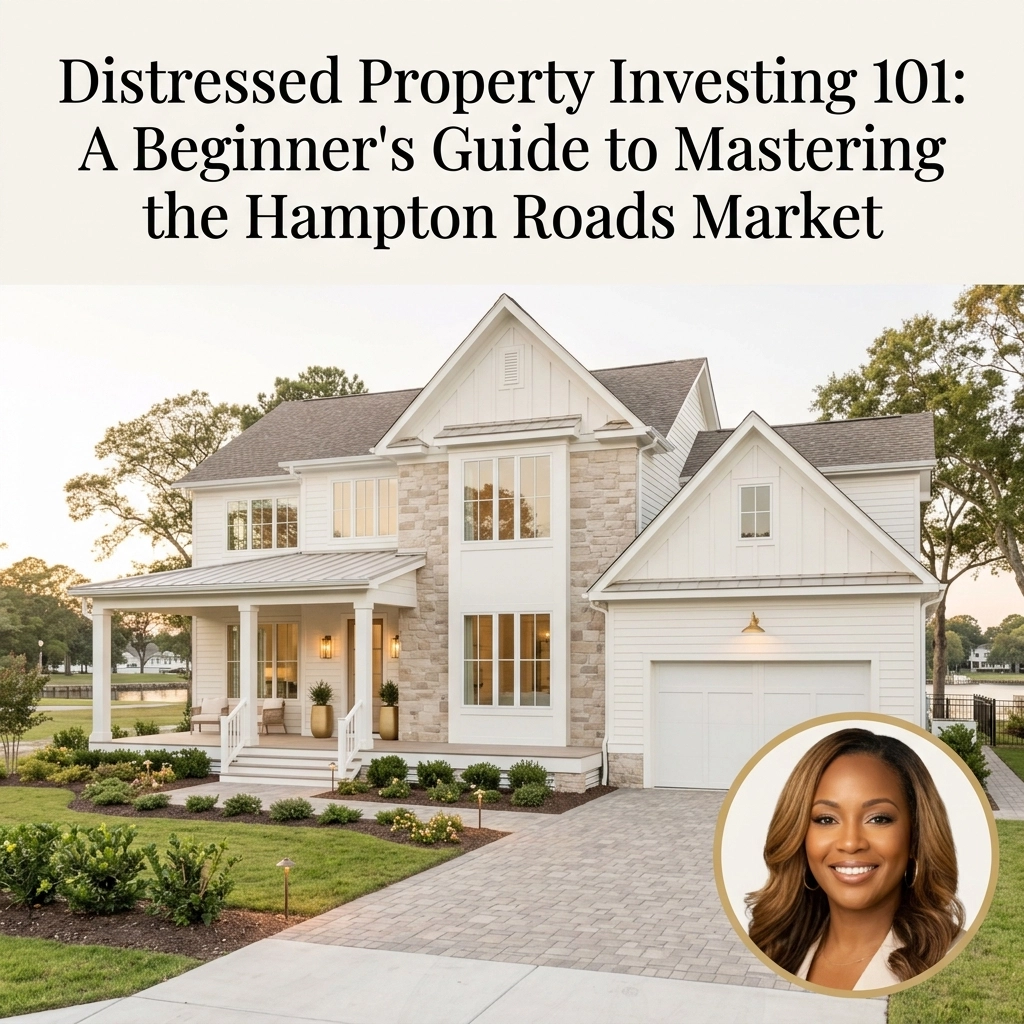
Listen, let’s get one thing straight from the jump: Distressed property investing isn't just about "fixing and flipping" some run-down house you saw on a reality TV show. It’s about strategy, community impact, and: most importantly: securing the bag for your family’s future. In the real estate world, we call this building generational wealth.
I’ve spent years in the boardroom and on the streets of Hampton Roads, from the quiet corners of Chesapeake to the bustling blocks of Norfolk. I’ve seen how the right investment can change a person's entire trajectory. If you’re looking to break into the 757 market, you need to know how to spot the diamonds in the rough before anyone else even knows they’re for sale.
This isn't just business; it’s about understanding the pulse of our neighborhoods. Whether you’re an aspiring investor or a homeowner currently facing some "distress" of your own, this guide is your blueprint.
What Exactly is a Distressed Property?
In "Boardroom Mode," we define a distressed property as a home that is under a foreclosure order or is being sold by a lender, often at a price below market value. But if we’re keeping it real? It’s a property where the owner can no longer keep up with the "three M’s": Mortgage, Maintenance, or Management.
In Hampton Roads, these properties pop up for various reasons: military reassignments that went sideways, probate issues in our established communities, or simply someone getting behind on their taxes. When you see a house with an overgrown lawn and a stack of mail in Portsmouth, that’s not just a "fixer-upper." That’s an opportunity to provide a solution for a neighbor and an asset for your portfolio.

Visual: A professional luxury office setting featuring ivory and gold accents, with neatly organized real estate documents and a gold pen on a polished desk. No people.
The Hampton Roads Landscape: Why the 757?
Investing in the 757 is different than investing in Atlanta or DC. We have a unique ecosystem. We’ve got the largest naval base in the world, a massive ship-building industry, and a tourism engine that never stops. This means our rental demand is consistently high.
When you’re looking at distressed properties here, you have to think geographically:
- Norfolk & Portsmouth: Great for those looking for historic bones and "urban-pioneer" flips.
- Chesapeake & Virginia Beach: These are the strongholds for long-term rental holds and "buy-and-hold" generational wealth.
- Newport News & Hampton: High potential for military-focused rentals.
The goal isn't just to buy low; it’s to understand the local zoning, the school districts, and where the city is planning its next revitalization project.
The Three Pillars of Distressed Investing
If you want to master this game, you need to understand the three main ways to acquire these assets.
1. Tax Liens and Tax Deeds
In Virginia, if you don't pay your real estate taxes, the municipality can eventually sell the property to recover those funds. This is a specialized lane. You aren't just buying a house; you’re often buying the debt or the right to the title. It requires a sharp eye for legal detail and a lot of patience. If you’re looking for a "quick win," this isn't it. This is for the investor who plays the long game.
2. The Foreclosure Pipeline
This is the most common entry point. A homeowner falls behind on payments, and the bank begins the process of taking the property back.
- Pre-Foreclosure: This is where the magic happens. The homeowner is in trouble, but the bank hasn't taken the house yet. This is your chance to step in as a "solution provider." You help them save their credit; they sell you the home at a discount.
- Foreclosure Auction: These happen on the courthouse steps (or online). It’s fast-paced, high-risk, and usually requires cash on the spot.
3. REOs (Real Estate Owned)
These are properties that didn't sell at auction and are now back on the bank's books. Banks don't want to be landlords. They want that liability off their balance sheet. This is where your negotiation skills: your boardroom energy: need to be at 100%.

Visual: A close-up of a set of modern house keys resting on a stack of professional closing documents. Bright lighting, ivory and beige palette. No people.
Securing the Bag: How to Finance the Deal
One of the biggest myths in real estate is that you need a million dollars in the bank to start. Don't get me wrong, cash is king, especially when you’re dealing with distressed sellers who need a quick exit. But there are other ways to move:
- Hard Money Loans: These are short-term, high-interest loans based on the property’s value, not your credit score. It’s perfect for a "fix and flip" where you plan to be out of the deal in six months.
- Private Money: This is about your network. Maybe your auntie has a 401k sitting idle, or a business partner wants to diversify.
- SDIRAs (Self-Directed IRAs): You can actually use your retirement funds to buy real estate tax-free or tax-deferred. This is the ultimate "boss move" for building wealth.
At Sherri Parsons Real Estate, we always tell our clients: Don't let a lack of capital stop your vision, but don't let your vision outrun your math. Always factor in a 15-20% "surprise" budget for renovations. In these old Hampton Roads homes, you never know what’s behind the drywall until you start pulling it down.
Due Diligence: The "Real Talk" Phase
You can’t just look at a house and see the "gold." You have to see the plumbing, the roof, and the foundation.
- Title Search: In the 757, probate issues can be a nightmare. Make sure the person selling you the house actually has the legal right to do so. You don't want to buy a house only to find out there are three cousins who also have a claim to it.
- Inspections: Never, and I mean never, skip the inspection. I don't care how "clean" the deal looks. Termites love Virginia humidity, and old pipes love to burst.
- The Neighborhood Pulse: Drive by the property at 10:00 PM on a Tuesday and 2:00 PM on a Saturday. Know what the "vibe" is before you commit your capital.

Visual: A sophisticated office layout with a focus on a marble tabletop. On the table sits a sleek laptop, a leather-bound planner, and a small model of a luxury home. Gold and ivory color scheme.
For the Homeowner in Distress: You Have Options
I want to pause here because sometimes the "distressed" party is a member of our community who is struggling. If you’re reading this and you’re worried about losing your home, don't just put your head in the sand.
There is no shame in a setback; the only shame is in not seeking a strategy.
- Short Sales: We can negotiate with the bank to let you sell the home for less than what you owe.
- Loan Modifications: Sometimes a professional can help you restructure your debt to keep you in the house.
- Cash Buyouts: If you need to walk away with your dignity and some relocation money, we can facilitate a quick, fair sale to an investor who will respect the property.
At Sherri Parsons Real Estate, we treat homeowners in distress with the same level of respect we give our high-net-worth investors. We’re in the business of people, not just property.
Mastering the Exit Strategy
Whether you’re flipping for a quick profit or holding for rental income, you need an exit strategy before you even sign the contract.
- The Flip: You buy it, fix it, and sell it to a family looking for their forever home.
- The BRRRR Method: Buy, Rehab, Rent, Refinance, Repeat. This is how you scale. You use the bank’s money to pay yourself back, keep the property, and move on to the next one.
In Hampton Roads, the "hold" is often more valuable than the "flip." With the military presence and the constant influx of professionals, a well-managed rental in a decent neighborhood is a literal ATM.
Closing Thoughts
Distressed property investing is a masterclass in patience, research, and grit. It’s about being smart enough to analyze the data and "hood" enough to see the potential where others only see a mess.
If you’re ready to start building that legacy in the 757, you don't have to do it alone. At Sherri Parsons Real Estate, we provide the educational foundation and the professional expertise to turn your investment goals into a reality. Let’s stop talking about "one day" and start talking about "closing day."

Visual: A bright, airy professional office window overlooking a symbolic representation of a growing city skyline. On the windowsill sits a small gold key and a business card holder. Professional ivory and beige palette.
Are you ready to find your first (or next) investment in Hampton Roads? Reach out to Sherri Parsons Real Estate today. We don't just sell houses; we build futures.